
Obituary writing guide
How to write an obituary, step by step
Start with the essential facts, add family and life story details, then close with service information and a meaningful final sentence.
Before you start
A good obituary does three jobs: it announces the death, honors the life, and tells people how to gather or show support. It does not need to be perfect on the first draft. Collect the facts, write in a warm third-person voice, then revise for accuracy.
If you want to see complete samples before writing, browse our obituary examples. If you prefer blanks to fill in, start with our obituary templates.
Obituary checklist
- Full name, age, birth date, death date, and residence
- Birthplace and parents, if you want a traditional structure
- Spouse, children, grandchildren, surviving family, and predeceased family
- Education, career, military service, organizations, hobbies, and personal qualities
- Funeral, visitation, burial, memorial, celebration of life, or private service details
- Livestream link, flowers, memorial donations, or memorial fund information
- A closing sentence, thank-you, quote, or final message
1. Start with the basic information
Begin with the facts people need first. This part should be clear, calm, and easy to verify before you add more personal details.
What was their full name?
Use the full legal or preferred name. You can include a maiden name, nickname, or commonly used name if it helps readers recognize them.
Example: Margaret Elaine Porter, Patricia Ann Coleman Smith, or Robert Allen "Bob" Hayes.
When were they born and when did they pass away?
Include birth and death dates when available. If you do not know every detail, use only what is accurate rather than guessing.
Example: She was born on June 2, 1943, and passed away peacefully on March 14, 2026.
Where were they born or where did they live?
Birthplace and residence help anchor the obituary. You can mention a hometown, longtime community, or the city where they passed away.
Example: Born in Dayton, Ohio, Margaret made Columbus her home for more than 50 years.
Do you want to mention the cause of death?
This is optional. Many families leave it out, use gentle wording, or mention it only if it feels meaningful or helpful.
Example: passed away peacefully, passed away unexpectedly, or after a courageous illness.
2. Add family relationships
Family details help readers understand the relationships that shaped the person's life. Keep the list accurate and discuss sensitive omissions with close family when possible.
Who were their parents?
Parents are often included near the beginning, especially in traditional obituaries. You can include full names or keep this brief.
Example: She was born to Henry and Louise Miller in Dayton, Ohio.
Who preceded them in death?
Mention close family members who died before them, such as a spouse, parents, siblings, children, or other central loved ones.
Example: She was preceded in death by her husband, Robert, and her brother, James.
Who survives them?
List surviving immediate family first. For large families, it is fine to use counts for grandchildren or great-grandchildren.
Example: She is survived by her children, Anna Porter and Michael Porter; five grandchildren; and two great-grandchildren.
Should grandchildren and great-grandchildren be named?
Naming everyone can be meaningful, but it can also make the obituary long. Use names when important and counts when the list is large.
Example: She was a proud grandmother of nine and great-grandmother of four.
After the obituary
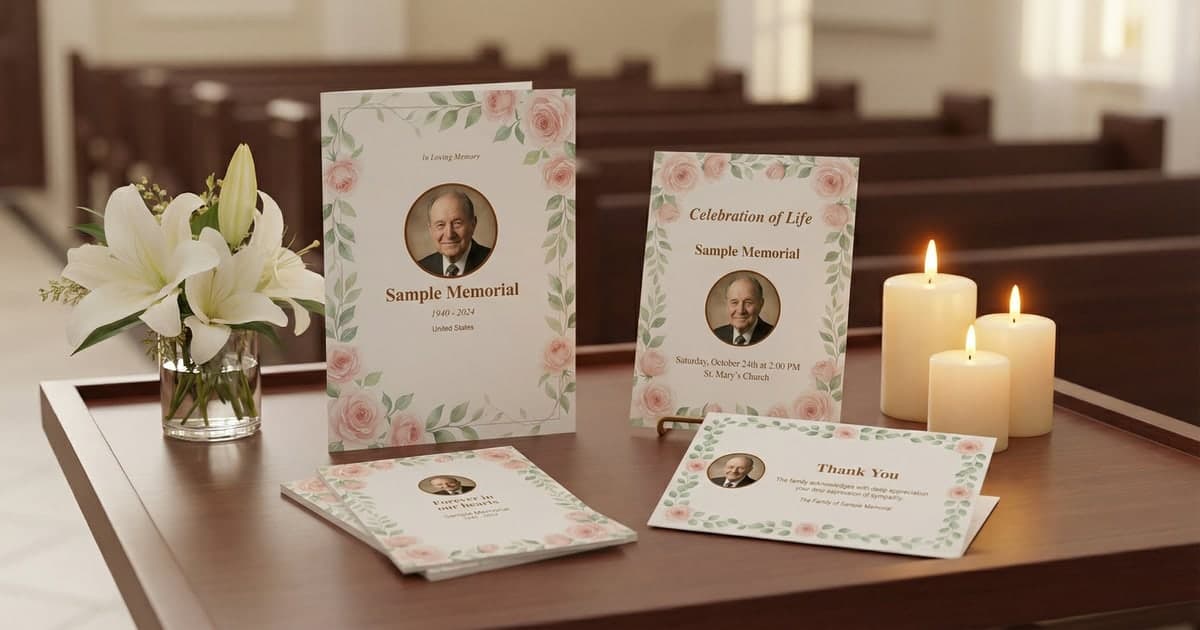
Create a funeral program from the obituary
Choose from 100s of funeral program themes, then reuse the obituary details you already wrote. The free obituary writer is included, so families can move from words to a finished program without starting over.
Create a funeral program

3. Tell the life story
This is where an obituary becomes more than a notice. Choose a few details that show what mattered in their life rather than trying to include everything.
What should you say about marriage or partnerships?
Include a spouse, partner, or significant relationship if it was central to their life. You can mention years together, where they met, or what they built together.
Example: She married Robert in 1964, and together they built a home known for open doors and Sunday dinners.
Should education be included?
Education is helpful when it shaped their path, career, community, or sense of identity. Keep it concise unless it was a major part of their story.
Example: Helen graduated from Roosevelt High School and remained close with many classmates throughout her life.
How do you write about military service?
Mention the branch, years served, rank, deployment, awards, or what their service meant to them. Keep the tone respectful and factual.
Example: Robert served in the U.S. Navy from 1962 to 1968 and was proud of the discipline and friendships he found there.
How much career history should you include?
Focus on work that was meaningful, long-lasting, or part of how people knew them. You do not need to list every job.
Example: She worked for many years as a school secretary, where she was known for remembering every child by name.
What organizations or community roles should be mentioned?
Include churches, clubs, volunteer work, professional groups, or community service if they were important to the person.
Example: She was active in her church community and volunteered weekly at the local food pantry.
How do hobbies and interests make an obituary better?
Specific hobbies make the obituary feel personal. Choose details that help readers picture the person clearly.
Example: He loved early morning fishing, old records, and long drives with no destination in mind.
How do you describe personality and legacy?
Use concrete traits and small examples. Instead of only saying kind, show how kindness appeared in everyday life.
Example: She gave generously through meals left on porches, handwritten cards, and the kind of listening that made people feel understood.
4. Include funeral, memorial, or celebration details
Service information helps people know how to gather, send support, or respect the family's wishes. If plans are not final, it is okay to say that details will be shared later.
What service details should an obituary include?
Include the type of gathering, date, time, location, and address. If there is a visitation, burial, reception, or livestream, mention those too.
Example: Visitation will be held Friday from 5 to 7 p.m. at Oak Hill Chapel. A funeral service will follow Saturday at 10 a.m.
What if the funeral or memorial is private?
State it simply and kindly. You do not need to explain the reason.
Example: A private family service will be held at a later date.
Should you include a livestream link?
If the service will be streamed, include a clear link or note that virtual attendance details will be shared by the funeral home or family.
Example: A livestream link will be available through the funeral home website before the service.
How do you mention flowers or memorial donations?
Families often include in lieu of flowers language, a charity, or a memorial fund. Be specific enough that people know what to do.
Example: In lieu of flowers, memorial donations may be made to the Alzheimer's Association.
5. Close with a meaningful final note
A closing sentence can make the obituary feel complete. It may express gratitude, name a legacy, share a short quote, or invite people to remember the person in a specific way.
Should you thank caregivers, friends, or institutions?
If someone provided meaningful care or support, a short thank-you can be appropriate. Keep it warm and concise.
Example: The family is grateful to the nurses and caregivers who treated Helen with dignity and tenderness.
Can you include a quote, prayer, or phrase?
A short quote can work well if it reflects the person's faith, humor, values, or favorite saying. Avoid making the ending too long.
Example: Her family will remember her favorite reminder: Leave people better than you found them.
What is a good final sentence for an obituary?
End with the legacy you want people to remember: love, service, faith, laughter, creativity, courage, or devotion.
Example: Her love remains a guiding presence for all who knew her.
Related resources
Use these if you want a faster starting point or a finished sample to follow.
Obituary templates
Fill-in-the-blank formats for short, traditional, memorial, mother, father, veteran, and sudden death obituaries.
Obituary examples
Read complete sample obituaries by style and situation before writing your own.
How to write an obituary FAQ
How long should an obituary be?
A short obituary may be 100 to 200 words. A fuller life story obituary is often 300 to 700 words, depending on where it will be published.
Do I need to include every family member?
No. Most obituaries list immediate family and use counts for larger groups such as grandchildren or great-grandchildren.
Can I write an obituary before service details are final?
Yes. You can write the life story first and add service details will be announced until the date, time, and location are confirmed.